QC Article 4: The Horse Whisperer
Jun 04, 2026
QUINNTESSENTIAL COACHING
What the Horse Whisperer Teaches Us About Leadership
2026: The Year of the Horse — lessons in trust, presence and connection
Paul Quinn | Founder & CEO, Quinntessential Coaching & Westport Partners
2026: The Year of the Horse
In the Chinese zodiac, 2026 is the Year of the Horse. The horse is a symbol of energy, freedom, loyalty and strength … a creature that can carry extraordinary weight when it chooses to, and that cannot be made to do anything through force alone. There is a lesson in that for every leader, manager, coach and professional who spends their days trying to get the best out of people.
I want to talk about horse whispering: the philosophy and technique behind natural horsemanship; not as a novelty or a metaphor, but as a genuinely instructive framework for how trust, presence, communication and leadership actually work. Because the principles that the great horse trainers use to build a relationship with an animal that outweighs them by five hundred kilograms are, in many ways, a more honest and more exacting version of the principles that the greatest human leaders use to build relationships with the people they lead.
“You cannot force a horse to trust you. You cannot manipulate it into following your lead. You have to earn it — through consistency, calm, patience and the willingness to understand the world from where the horse stands. Sound familiar?”
The Philosophy of Natural Horsemanship
Traditional horse training has historically relied on dominance — the breaking of the horse's will through fear, force and submission. The horse performs because it has learned that not performing has painful consequences. The relationship is transactional at best and coercive at worst.
Natural horsemanship — the approach associated with practitioners like Monty Roberts, who coined the term 'join-up', and Tom Dorrance, the founder of 'true unity' — works on an entirely different principle. The horse is not broken. It is invited. The trainer studies the horse's natural language — the precise, nuanced communication system of posture, movement, energy and eye contact — and uses it to build a relationship based on mutual trust and genuine respect. The willing cooperation that results is qualitatively different from coerced compliance.
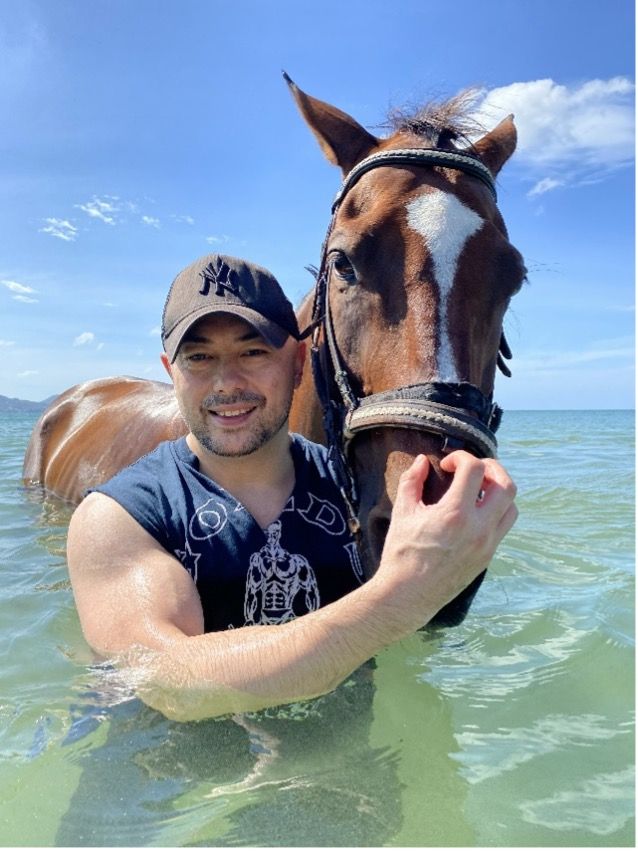
⚡ The Join-Up
Monty Roberts' join-up technique works by giving the horse the choice to connect. After a period in which the horse runs free and the trainer uses precise body language to communicate, the horse — having been given the genuine option to leave — turns toward the trainer and chooses to follow. The trainer's response is to turn their back and walk away, trusting the horse to come. It always does. The lesson: genuine invitation, not compulsion, is what creates genuine commitment.
What This Teaches Leaders, Managers and Coaches
1. Presence Before Words
Horses read energy before they read language. Before a trainer speaks a single command, the horse has already read their emotional state. A trainer who is anxious projects anxiety. A trainer who is calm projects calm. How often do we bring anxiety, impatience or frustration into conversations with our teams and then wonder why the conversation does not go the way we intended? Our people are extraordinarily sensitive to the emotional state of those in authority over them. The leader who walks in having done nothing to manage their own internal state is already at a disadvantage before they have said a word.
2. Communication Is Mostly Nonverbal
In natural horsemanship, the trainer's most important tools are their eyes, their body orientation, their breathing and their distance from the horse. A direct gaze and a squared stance is a pressure signal. Soft eyes and a turned shoulder is an invitation. Research consistently shows that in human communication, the nonverbal signal carries more weight than the verbal one. The manager who says the right words with the wrong tone and the wrong posture … is heard for the nonverbal, not the verbal.
3. Pressure and Release — The Principle That Actually Works
In horse training, behaviour is shaped through the principle of pressure and release. You apply a gentle pressure: a request and when the horse moves in the desired direction, you release the pressure immediately. Not after the horse has fully completed the movement. The moment the movement begins in the right direction, the pressure releases. The release is the reward.
In management: recognise the movement, not just the destination. Most managers acknowledge performance only when the full result has been delivered. The best ones notice the early steps in the right direction and respond to them. That responsiveness shapes behaviour faster than any performance review.
“The release — the acknowledgement of movement in the right direction — is worth more than any formal reward system. It is immediate, specific and human. It costs nothing and it changes everything.”
4. Consistency Builds Trust — Inconsistency Destroys It
A horse that receives an inconsistent signal … the same request that produced a positive response yesterday produces a negative one today — becomes anxious, unreliable and difficult to work with. Not because the horse is defective. Because inconsistency has made the environment unpredictable. Inconsistent leadership does the same thing to human teams. When expectations change without explanation, when the mood of the leader determines the treatment of the team, people stop taking risks and focus their energy on managing the leader's mood rather than delivering excellent work.
5. You Cannot Lead Someone You Do Not Know
The great horse trainers spend as much time observing as they do working. They learn the specific individual in front of them — not 'horses in general' but this horse, with these particular characteristics, on this particular day. How much time do you spend genuinely observing the individuals on your team? Not managing them or appraising them — just watching them, learning what conditions bring out their best work and what conditions produce their worst?
For the Individual: What Horses Teach Us About Ourselves
There is something else in the horse-human relationship that speaks to the individual professional, not just the leader. When a horse chooses to connect with you — truly chooses it, not out of fear but out of trust — it happens only when you are fully present. Not thinking about the last meeting or the next email. Not performing calm while feeling anxious underneath. Present. Grounded. Genuinely there.
That quality of presence — the ability to be fully in the moment with another person, to give them your complete attention without an agenda … is one of the rarest and most powerful things one human being can offer another. In business, in coaching, in leadership and in life. The horse simply makes it visible.
The Year of the Horse — Your Invitation
The year of the horse is an invitation to ask a harder question than usual. Not 'how do I get my team to perform?' but 'what kind of environment am I creating and do people follow my lead because they have to, or because they genuinely want to?'
The horse whisperer's answer requires the leader to do the internal work first … to manage their own energy and presence before they worry about managing anyone else's behaviour. It requires genuine patience, the willingness to move at the pace of trust rather than the pace of urgency. And it requires a fundamental belief that willing cooperation is worth more than reluctant compliance — even when the latter is faster. The relationship is the performance. Build the relationship first. The performance follows.
“The horse does not know your title or your P&L or your track record. It knows how you make it feel when you are in the room. So does your team.”
You have the degree. You have the experience.
Now invest in the most important asset of all.
Paul Quinn | Founder & CEO | Quinntessential Coaching
quinntessential-coaching.com • @PAULQUINNOFFICIAL